
Start with the privacy you want.
Wood fencing can be straightforward or highly finished. Pecos prefers Japanese cedar pickets and steel posts for residential privacy work. The choices that change the look most are picket layout, fence height, cap and trim, and stain color.
Side-by-side
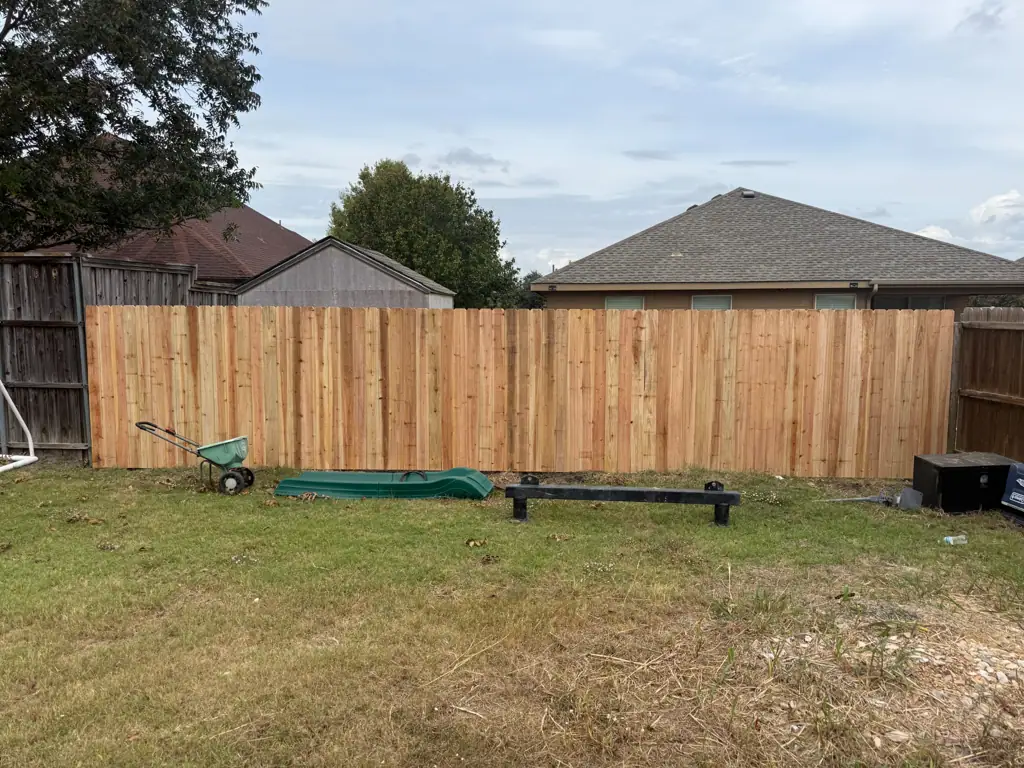
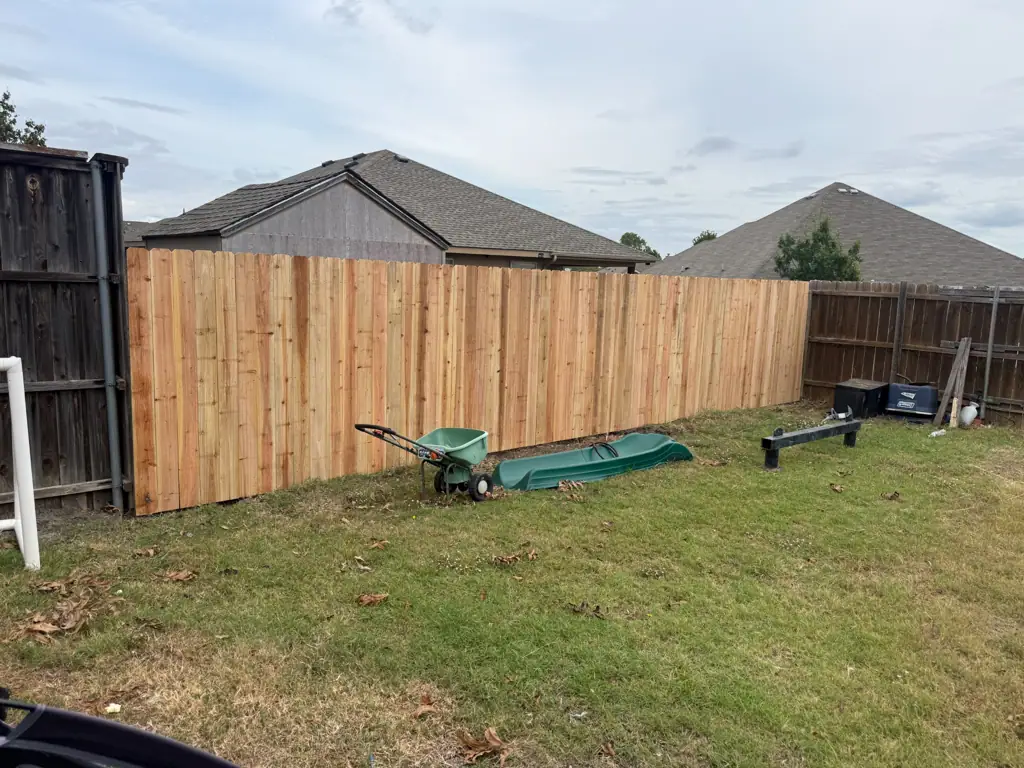
Pickets sit beside one another in one plane. A clean, practical privacy layout, with small gaps possible as natural wood moves over time.
Board-on-board
Overlapping pickets add visual depth and help maintain privacy as boards shrink. The tradeoff is added material and labor.
The structure behind the cedar
Steel posts are our standard for wood privacy fences. On a typical six-foot fence, we plan three horizontal 2×4 rails; eight-foot fences typically use four. The exact post, footing and rail specification depends on height, exposure and the approved scope.
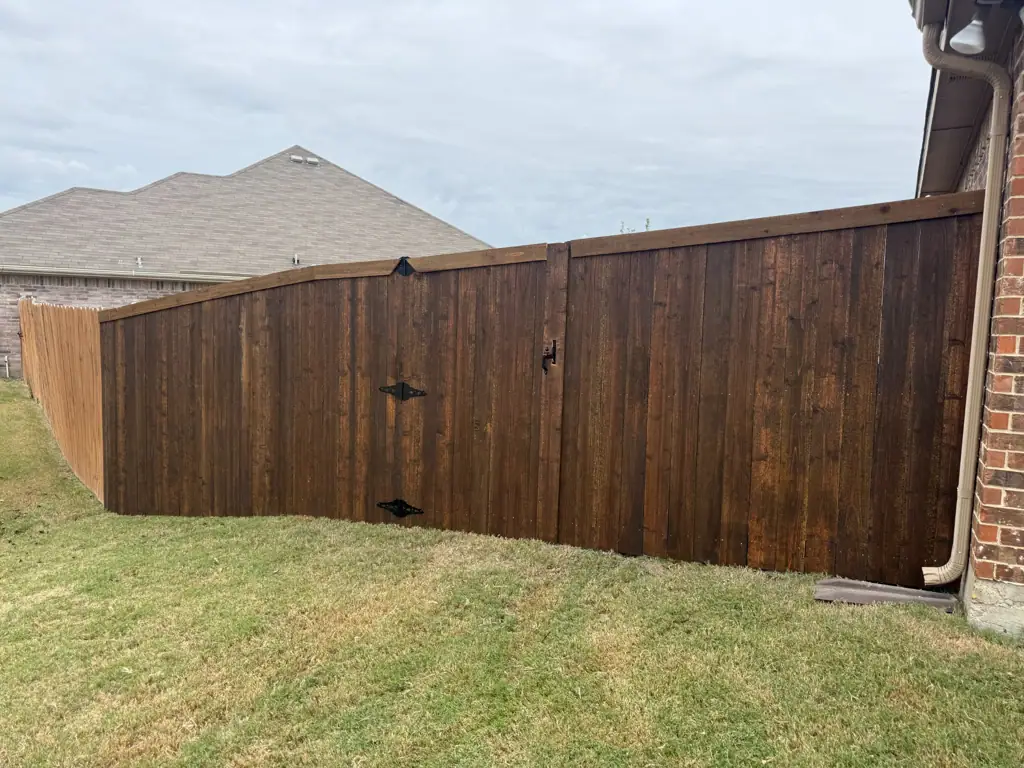
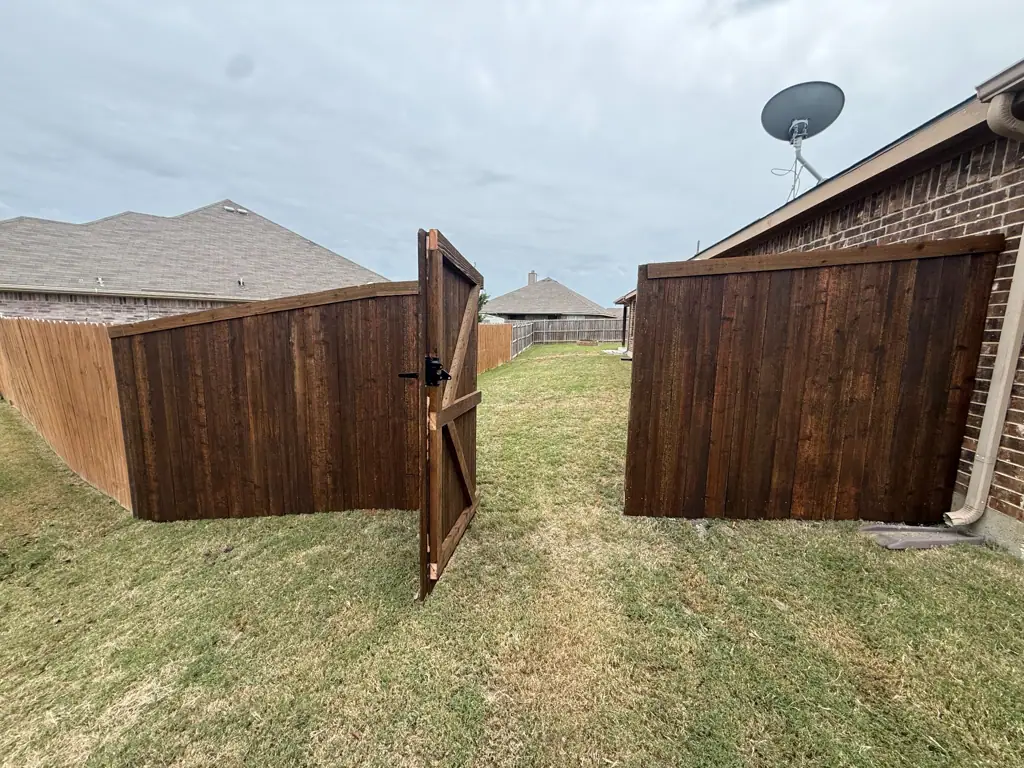
On sloping ground, we decide whether to follow the grade or step panels. For small dogs or washout-prone areas, a kickboard may help close uneven gaps. Where a fence meets masonry, an existing neighbor fence or a gate opening, those transitions deserve their own plan.
Details that change the finished look
Cap-and-trim, trim-only, prestained cedar and matching gates are all ways to give a fence a more intentional appearance. A stain upgrade should coordinate the visible 2×4 rails, trim and caps—not leave mismatched lumber around the finished pickets.
Not every property needs the highest-end package. We can compare a simple six-foot side-by-side fence with a board-on-board or cap-and-trim option and show what changes in the scope.
Compare board-on-board and side-by-side fencing →
Before your estimate
Approximate footage, preferred height, number of walk and driveway gates, demolition needs and whether you want prestained or unstained lumber are the most useful starting details. HOA rules or an uncertain property line should be addressed before installation.
Frequently asked questions
Do you use steel posts on wood fences?
Yes. Steel posts are our preferred structural post for wood privacy fencing. Exact post size and installation depend on fence height, gate loads, soil, and site conditions.
What is the difference between side-by-side and board-on-board?
Side-by-side places pickets next to each other in one plane. Board-on-board overlaps alternating pickets for a fuller look and improved privacy as lumber naturally moves over time.
Can you build cap and trim?
Yes. Cap-and-trim details are available and can give a privacy fence a more finished architectural top line.
Can you match an existing fence?
Often. We compare picket width, height, rail layout, post spacing, trim details, and stain. Sometimes a partial match works well; other times replacing a longer section creates the cleaner result.